
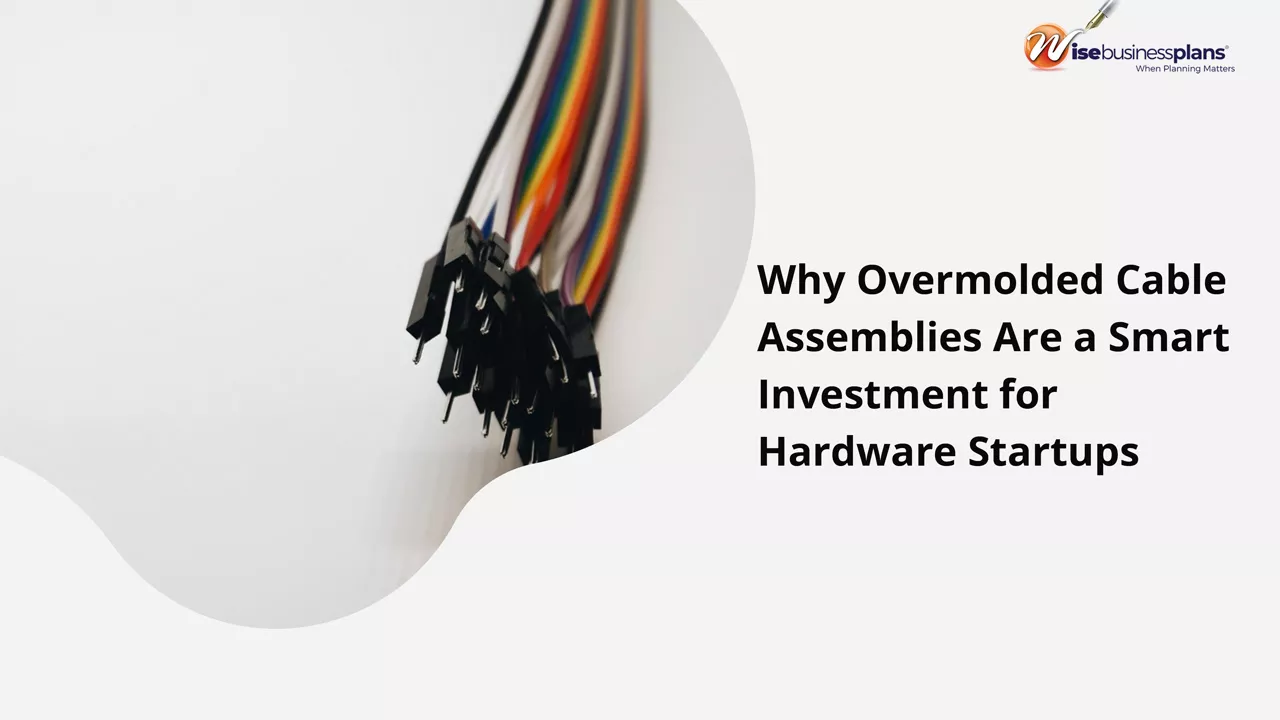
Why Overmolded Cable Assemblies Are a Smart Investment for Hardware Startups
Table of Contents
- What Cable Overmolding Actually Is?
- The Injection Molding Process
- Common Materials: TPU vs PVC
- The Real Benefits: Beyond Basic Durability
- Strain Relief That Actually Works
- Enhanced Pull Strength and Mechanical Protection
- Professional Appearance and Brand Perception
- EMI Shielding and Performance Consistency
- Startup-Specific Cost-Benefit Reality Check
- Understanding Upfront Tooling Investment
- Calculating ROI: Warranty Costs vs. Overmolding Investment
- Minimum Order Quantities and Budget Planning
- From Prototype to Production: Timing Your Overmolding Investment
- When to Use Standard Assemblies During Prototyping
- The Right Time to Commit to Overmolding Tooling
- Scaling Considerations: Low Pressure Molding vs. Traditional Methods
- Risk Mitigation: How Overmolding Protects Your Startup
- Preventing Field Failures That Kill Startups
- Warranty Cost Protection
- Customer Support Overhead Reduction
- When Overmolding Might Not Be the Right Choice
- Frequently Asked Questions
- Do overmolded cable assemblies matter that early?
- Is overmolding only about looks?
- TPU or PVC, which should a startup pick?
- When should teams pay for tooling?
- What is a sensible next step?
Hardware startups rarely fail because the electronics do not work in the lab. They fail when small reliability issues show up in the field, trigger returns, and drain time from a tiny team. Cables sit right on that fault line: they flex, they get yanked, and they live near heat, vibration, and curious users. That is why overmolded cable assemblies deserve attention early, even when budgets feel tight.
An overmolded cable assembly adds molded protection at the connector and transition points, where many real-world failures start. Done well, it builds in proper strain relief, reduces intermittent connections, and helps keep moisture and debris away from sensitive terminations. Fewer failures in the field usually means fewer RMAs, fewer support tickets, and less time spent troubleshooting “it worked yesterday” issues that founders cannot afford to chase.
There is also the customer perception factor. A clean, finished overmold looks like a deliberate product choice, not an afterthought. For many hardware buyers, that professional appearance signals quality and consistency, especially compared with improvised solutions like heat shrink stacks or glue.
The trade-off is upfront tooling and development time. But for a startup, preventing even a small slice of returns can justify that investment, especially when the alternative is repeated manual rework on every unit.
What Cable Overmolding Actually Is?
The Injection Molding Process
Cable overmolding is a manufacturing step that uses injection molding to encapsulate the vulnerable area where the cable meets connectors or where wires transition into a housing. A supplier places the terminated cable and connector into a mold, then injects molten material around that junction. After it cools, the overmold becomes a permanent part of the assembly. If you want a clear example of what this looks like in practice, the Cloom Tech overmolded cable assembly page is a helpful reference when you are getting familiar with the process and options.
The main goal is practical: create a consistent, protective seal around connection points that otherwise see stress from bending, pulling, and handling. That added material also lets the design build in strain relief geometry instead of relying on tape, adhesive, or stacked heat shrink. Knowing this basic flow helps you ask better questions about tooling, parting lines, and how the supplier will hold the connector during molding.
Common Materials: TPU vs PVC
Most cable overmolding uses TPU or PVC. TPU typically suits designs that need flexibility and a softer feel. PVC often works when you want a firmer overmold and a cost-conscious material choice. The right pick depends on how the cable will be used, flexed, and cleaned, so discuss those real-world conditions early.
The Real Benefits: Beyond Basic Durability
Strain Relief That Actually Works
A good overmold builds in real strain relief at the cable-to-connector transition, where bending and tugging concentrate. That matters because cable-to-connector separation is often the failure mode teams see first in the field. Instead of relying on careful assembly technique or stacked heat shrink, the geometry of the overmold takes the load and reduces stress on the termination.
Enhanced Pull Strength and Mechanical Protection
Overmolding can also improve pull strength by spreading force across a larger area and shielding the joint from abrasion and impact. For a startup, that usually translates to fewer intermittent failures, fewer returns, and fewer “could not reproduce” support cases. It also helps wire harnesses survive handling during manufacturing, installation, and servicing, especially when technicians grab whatever is easiest to pull.
Professional Appearance and Brand Perception
A consistent overmolded finish looks intentional. In demos, pilot deployments, and investor meetings, that polish signals the team pays attention to reliability details, not just core electronics. It can also make units look more consistent across small batches, where DIY fixes tend to vary.
EMI Shielding and Performance Consistency
Some designs can incorporate EMI shielding strategies in the cable and termination area, which may reduce susceptibility to electromagnetic interference in dense electromechanical products. As interest grows in the growing overmolded cable assemblies market, startups still benefit most by validating shielding needs early and testing in real operating environments.
Startup-Specific Cost-Benefit Reality Check
Understanding Upfront Tooling Investment
For a startup, the biggest hesitation is usually the upfront tooling required for an overmolded cable assembly. In early supplier quotes, teams often see tooling proposals in the $500 to $5,000 range, depending on part complexity, number of cavities, and how the connector needs to be fixtured during injection molding. That spend can feel hard to justify when every dollar competes with firmware, certifications, and inventory.
The reality is that tooling is a one-time step toward consistency. Without it, teams often pay in manual rework, inconsistent strain relief, and field issues that cost more than they look on a spreadsheet.
Calculating ROI: Warranty Costs vs. Overmolding Investment
The clean way to evaluate ROI is to compare expected warranty exposure against the tooling investment for a custom cable assembly. A single batch of warranty replacements can exceed the tooling cost if failures trigger shipping, labor, support time, and customer frustration.
A simple break-even approach:
- Estimate current failure rate and the expected reduction after overmolding.
- Multiply avoided failures by total cost per failure (replacement unit + handling + support).
- Compare that to tooling plus per-unit overmolding cost.
Minimum Order Quantities and Budget Planning
Many suppliers set minimum order quantities for overmolded assemblies, which can force upfront volume commitments. The upside is that cost-per-unit usually drops meaningfully at production scale, so teams can plan pilots separately from ramps. Folding this into an investor-ready planning checklist helps founders defend the spend as reliability insurance, not cosmetic polish.
From Prototype to Production: Timing Your Overmolding Investment
When to Use Standard Assemblies During Prototyping
Early prototypes rarely justify an overmolding tooling purchase. During rapid iteration, startups often change enclosure geometry, cable routing, and even the exact connectors, and each change can ripple into the overmold shape. In this phase, many teams move faster by using standard assemblies and simple strain relief approaches, then treating the cable as a swappable part while the product stabilizes.
This approach also keeps a custom cable assembly effort from locking the team into a design detail that might not survive the next test cycle.
The Right Time to Commit to Overmolding Tooling
Committing makes sense when the design is stable and the team can forecast production volume with reasonable confidence. Before tooling, teams should validate the cable path, bend points, and connector retention in realistic handling, not just on a bench. If testing still produces “we will fix it later” notes, it is usually too early to lock in tooling.
Founders often plan this decision as part of the broader scale-up path from prototype to market, rather than as a standalone cable upgrade.
Scaling Considerations: Low Pressure Molding vs. Traditional Methods
For smaller runs, low pressure molding can reduce tooling cost and shorten lead times compared with traditional approaches. As volumes grow and the assembly and connectors settle, teams can revisit whether a higher-throughput process fits the production plan and quality targets.
Risk Mitigation: How Overmolding Protects Your Startup
Preventing Field Failures That Kill Startups
Early hardware teams can survive a few rough edges, but they cannot survive public failure narratives. One viral complaint about a cable that “dies after a week” can become the story customers and partners remember. An overmolded cable assembly reduces common failure points at the connector transition by adding engineered strain relief and better mechanical support, which lowers the odds of intermittent disconnects that trigger negative reviews.
Warranty Cost Protection
Cable failures rarely stay contained. Each field failure can create a chain reaction: replacement parts, shipping, diagnosis, and the internal time to verify the issue is not a deeper product defect. Overmolding helps by increasing pull strength and reducing damage from yanks, tight bends, and repeated handling, so fewer units enter the warranty pipeline in the first place.
Customer Support Overhead Reduction
Support teams in startups run thin, and cable-related tickets tend to be noisy and time-consuming. When the cable behaves predictably, the team spends less time on troubleshooting and more time on onboarding, features, and growth. For hardware startups, reliability becomes a competitive moat, and details like cable construction often decide whether that moat holds.
When Overmolding Might Not Be the Right Choice
Cable overmolding is not a default upgrade. In some startup scenarios, it can lock in decisions too early or spend budget where it will not change outcomes.
It often makes sense to wait when:
- The team is still pre-product-market-fit and iterating on enclosures, cable routing, or connector placement. Tooling changes can pile up fast.
- Production volume stays very low (often under 500 units). In that range, tooling and setup may outweigh the reliability gain versus a well-built custom cable assembly.
- Connector standards change frequently (for example, evolving interface choices or customer-specific connectors). A modular approach using replaceable pigtails or adapters can reduce redesign churn.
- Budget is tight and other quality investments come first, like better connectors, improved strain relief in the enclosure, or higher-quality crimping and test processes for wire harnesses.
- The product lives indoors in a low-stress environment with minimal flexing, pulling, or contamination. Basic protection may already be enough.
Finally, if standard cable assemblies already meet the reliability target in testing and early field use, adding overmolding can become extra cost without solving a real problem.
Frequently Asked Questions
Do overmolded cable assemblies matter that early?
They can, especially when the product sees flexing, yanks, vibration, or contamination. Early field failures often show up at connectors and the strain relief zone.
Is overmolding only about looks?
No. A clean finish helps perception, but the practical win is protecting terminations and reducing intermittent connections that drive RMAs and support time.
TPU or PVC, which should a startup pick?
TPU often fits designs that need flexibility and a softer feel. PVC can suit firmer overmolds and cost-sensitive builds. Teams should match the material to real handling, cleaning, and bend points.
When should teams pay for tooling?
When connector choice, cable routing, and enclosure geometry have stabilized enough that changes will be rare.
What is a sensible next step?
Founders can bring a sample cable and use-case details to a supplier, then review tooling, MOQ, test expectations, and whether low pressure molding fits the first production run.