

Consumer demand for fresh bread, artisan pastries, cakes, and locally made baked goods continues to rise across the United States, creating strong opportunities for both independent bakeries and specialty pastry shops. As competition grows, entrepreneurs are turning to a professionally developed bakery business plan to build sustainable operations, attract investors, and improve long-term profitability.
At Wise Business Plans, we help bakery owners and aspiring bakers develop strategic growth plans with accurate financial projections, operational planning, pricing strategies, and market analysis. Our customizable bakery business plan template is designed to help you confidently launch, manage, and expand your bakery business.
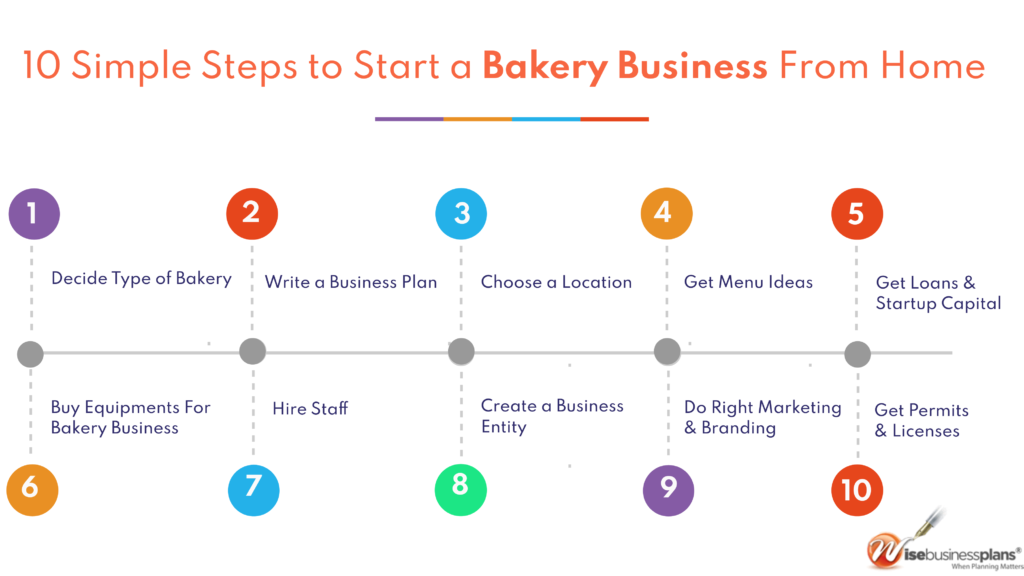
10 Simple Steps to Start a Bakery Business From Home
1. Choose the Right Bakery Business Model
Before launching your bakery, determine which business model aligns best with your goals, budget, and target market. Popular options in 2026 include retail bakeries, wholesale production bakeries, home-based bakeries, online dessert brands, and specialty bakeries focused on organic, gluten-free, or custom products. The bakery industry continues to evolve with rising demand for artisanal baked goods, delivery-friendly menus, and personalized customer experiences. Selecting the right format early will help shape your branding, equipment needs, staffing, and long-term growth strategy.
2. Write a bakery business plan
A well-structured bakery business plan is essential before launching your bakery in today’s competitive food industry. Your plan should clearly define your concept, target audience, pricing strategy, startup costs, and revenue model. It should also explain the type of business structure you plan to register, whether it’s an LLC, sole proprietorship, or partnership. Modern bakery business plans should include digital marketing strategies, online ordering systems, delivery operations, supplier management, and detailed financial projections to support long-term growth and funding opportunities.
Do You Need a Bakery Business Plan?
Here’s the good news: you can minimize the time it takes to write a business plan by hiring Wisebusinessplans who have over a decade of experience writing business plans, spanning over 400 industries.
Hire a business plan writer now!
3. Choose a location for your bakery business
It is important to determine a good location for a bakery before you start the business. A bakery’s ideal location is a reputable market or high-end shopping street where foot traffic is high. It is also important to ensure that the location has a good water supply and drainage system when selecting the bakery location. It is ideal for your space to be easily accessed by a high volume of people, and to have enough seating space.
4. Get menu ideas
Before finalizing your bakery concept, you should develop a sample menu that reflects your brand, pricing strategy, and customer demand. Your menu directly impacts ingredient sourcing, equipment needs, staffing, and the cost of opening your business. In 2026, successful bakeries are focusing on specialty items such as artisan breads, custom cakes, vegan desserts, gluten-free products, and seasonal offerings. Creating unique, high-quality menu items helps differentiate your bakery from competitors while building customer loyalty and repeat sales. Testing recipes, refining presentation, and adapting to current food trends are all critical steps in developing a profitable bakery menu.
5. Obtain loans and startup capital
Starting a bakery in 2026 involves more than just baking equipment and ingredients. You’ll need to budget for commercial rent, kitchen renovations, payroll, licenses, inventory management systems, utility expenses, and getting business insurance to protect your operation from unexpected risks. Many modern bakeries also invest in online ordering platforms, delivery integrations, and social media marketing to stay competitive. Having adequate startup capital and a realistic financial plan is essential for maintaining smooth operations during the early growth stages of your bakery business.
Funding is a Problem for You?
Our experts have raised more than $1 billion in funding for our clients. Let Wisebusinessplans’s experts help you to get the business funding for your bakery business every step of the way!
6. Buy equipment needed to start a bakery business
The type of baking equipment your bakery needs will depend on your menu, production volume, and business model. Modern bakeries in 2026 are investing in energy-efficient ovens, commercial mixers, blast chillers, dough sheeters, proofing cabinets, refrigeration units, and smart storage systems to improve consistency and reduce operational costs. Stainless steel equipment remains the industry standard because of its durability, hygiene, and long-term reliability. Startups looking to reduce initial expenses can also consider certified pre-owned equipment, especially for worktables, racks, and storage solutions, without compromising productivity.
7. Hire staff
Retail and wholesale bakeries rely heavily on skilled staff to maintain product quality, efficiency, and customer satisfaction. In today’s bakery industry, hiring experienced bakers, pastry chefs, prep assistants, and front-of-house employees is essential for smooth daily operations, especially for businesses with early morning production schedules. Cafe-style bakeries also require trained counter staff and customer service teams who can manage online orders, delivery coordination, and in-store guest experiences. Strong customer service and consistent product quality play a major role in building repeat business, positive reviews, and long-term brand loyalty in the competitive bakery market.
8. Create a business entity
Once your bakery business plan is finalized, the next step is to legally establish your company and complete all required registrations at the local, state, and federal levels. Choosing the right types of business structures is important because it affects your taxes, liability protection, ownership flexibility, and long-term growth opportunities. Common options for bakery businesses include LLCs, sole proprietorships, partnerships, corporations, and S corporations. In 2026, many bakery startups prefer LLC structures because they offer operational flexibility and personal liability protection while supporting future expansion and funding opportunities.
Recommended: How To Choose a Business Structure
Need to Register a Business Entity for Bakery Business?
Wisebusinessplans registered agents provide business formation services to make incorporation easy and free up your time to focus on other tasks.
9. Do the right marketing & branding of your bakery business
Branding and marketing play a critical role in helping modern bakeries stand out in a highly competitive market. Building a strong visual identity starts with hiring a professional logo designer to create a memorable logo, packaging design, storefront signage, and digital brand assets that reflect your bakery’s personality and target audience. In 2026, successful bakery brands also focus on professionally designed menus, social media visuals, online ordering interfaces, and branded packaging to improve customer recognition and increase repeat sales. A consistent brand identity helps establish trust, strengthen customer loyalty, and create a lasting impression across both in-store and online platforms.
10. Obtain permits and licenses
Before opening your bakery, it is important to secure all required permits and licenses needed to legally operate your business. Requirements may vary depending on your state, county, and city regulations, as well as whether you operate a retail bakery, home bakery, food truck, or wholesale facility. In 2026, bakery businesses commonly need food service permits, health department approvals, business licenses, sales tax registrations, fire safety inspections, and zoning clearances. Staying compliant with local regulations helps avoid legal issues, protects your business operations, and builds customer trust from the beginning.
Do you need a Business License for Bakery Business?
In recent years, Wisebusinessplans have made it easier to obtain a business license for a bakery, which is usually required to operate a bakery business.
View our business plan examples gallery page to help you write your own business plan or hire a business plan writer now, call us at 1-800-496-1056.
“We want our clients to understand that we are here for the long term — to meet their needs today when they are ready to open a new business, and tomorrow when they are seeking expansion options and increased funding opportunities,” stated Ferriolo.
Wisebusinessplans, staffed with professional MBA business plan writers, researchers, and financial experts, is a trusted partner for businesses across a broad spectrum of products and services. Our mission is to empower our clients to make the best possible business decisions, boost company performance and facilitate their funding success by laying the groundwork for strong businesses that excite, inspire and retain talented and exceptional employees.
Other Major Business Services for Bakery Business
Starting a bakery business? With Wisebusinessplans, you will receive a quick and easy guide to starting your bakery business, as well as assistance in every step along the way from funding to registering or licensing a business entity, branding, and marketing. Following are our main services
Wisebusinessplans also offer a net 30 payment terms. A Net-30 account allows you 30 days to pay the bill in full after you have purchased products. Managing your business finances is also easier with Net 30 accounts. Apply for your net 30 business accounts now
FAQs:
The initial steps include researching local regulations and obtaining necessary permits, setting up a dedicated kitchen space, developing a business plan, creating a menu, and establishing a branding and marketing strategy.
The specific permits and regulations vary depending on your location. Generally, you’ll need to comply with food handling and safety regulations, obtain a food service license, and potentially undergo inspections of your home kitchen.
Designate a specific area of your home as your bakery kitchen, separate from personal cooking areas. Equip it with the necessary baking equipment, storage space for ingredients, and meet local health and safety requirements.
Create a menu based on your baking expertise and customer preferences. Offer a variety of baked goods such as bread, cakes, pastries, and cookies. Consider dietary restrictions and explore unique flavor combinations to stand out.
Utilize social media platforms to showcase your products, engage with potential customers, and offer promotions. Establish a professional website with an online ordering system. Leverage word-of-mouth marketing, collaborate with local businesses, and participate in community events to increase visibility.


