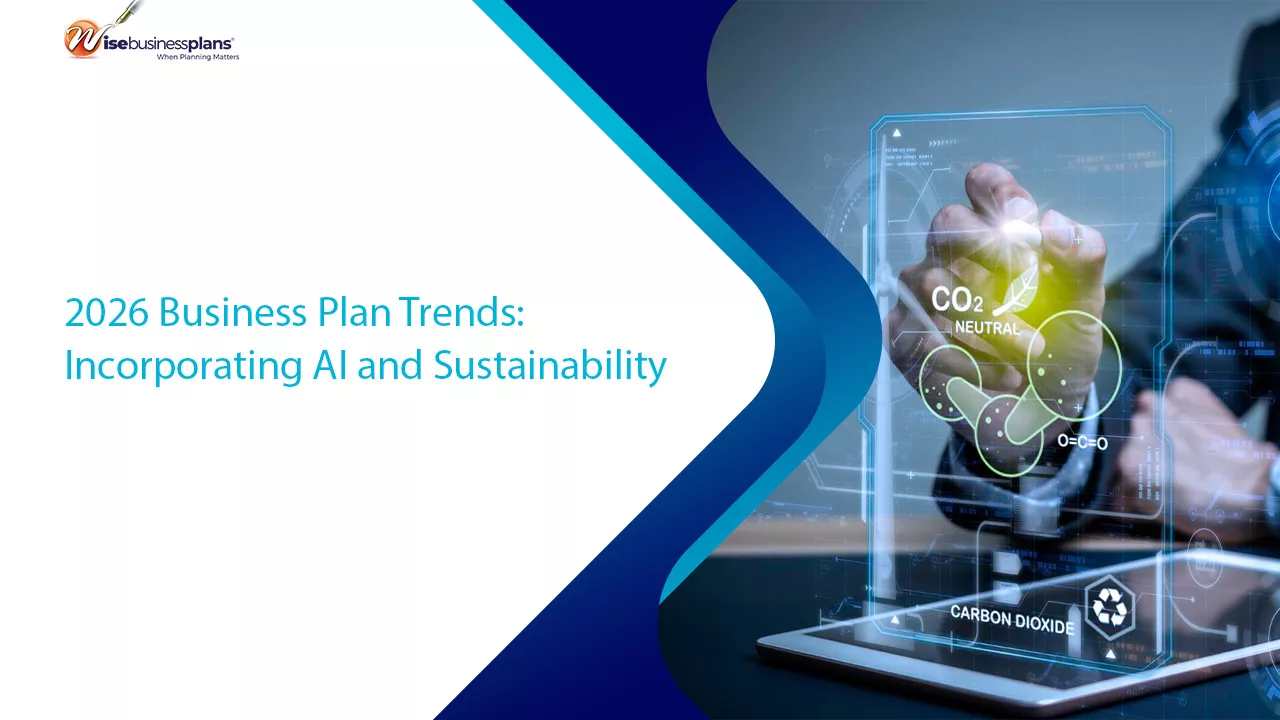
The world of business is in constant motion, and the documents that guide it must evolve as well. A business plan from five years ago looks vastly different from one prepared today. As we look toward 2026, two powerful forces are reshaping business strategy: Artificial Intelligence (AI) and a deep-seated commitment to sustainability. Forward-thinking entrepreneurs are no longer treating these as separate initiatives but are weaving them into the very fabric of their strategic planning.
This article will explore the top 2026 business plan trends, focusing on how to successfully merge AI-driven insights with Environmental, Social, and Governance (ESG) principles. We will provide a step-by-step guide to help you build a plan that is not only ready for the future but also highly attractive to modern investors and stakeholders. A successful strategy will hinge on the smart use of AI in business planning 2026 and the authentic integration of sustainability.
The Twin Pillars of Modern Business Planning
Why are AI and sustainability the defining trends? Because they address the two most critical questions for any modern business: “How can we operate smarter?” and “How can we operate better?”
Artificial Intelligence (AI) has moved from a futuristic concept to a practical business tool. AI algorithms can analyze vast datasets to uncover patterns, predict future market shifts, and automate complex forecasting. For business planning, this means creating financial projections with unprecedented accuracy, identifying market opportunities that human analysis might miss, and optimizing operational strategies before a single dollar is spent. A plan that leverages business plan AI 2026 demonstrates a commitment to data-driven decision-making and operational excellence.
Sustainability (ESG) has become a non-negotiable for long-term success. Investors, customers, and top talent are all drawn to companies that demonstrate a genuine commitment to positive environmental and social impact. An ESG business plan 2026 is not just about being green; it’s about managing risk, building brand loyalty, and ensuring your business is resilient in the face of changing regulations and consumer expectations. A sustainable business plan 2026 is simply a good business plan.
Step-by-Step Guide: Integrating AI and ESG into Your Plan
Combining these two trends creates a powerful synergy. AI can provide the data needed to make your ESG initiatives measurable and impactful. Here’s how to integrate them into your business plan.
Step 1: Use AI for a Data-Driven Materiality Assessment
Before you set ESG goals, you need to know which issues matter most to your business and industry. This is called a materiality assessment. AI can supercharge this process.
- How to do it: Use AI-powered market research tools to scan industry reports, competitor disclosures, social media conversations, and news articles. These tools can quickly identify the ESG topics—such as carbon emissions, supply chain labor, or data privacy—that are most discussed and carry the most risk or opportunity in your sector.
- What to write: In your business plan, dedicate a section to your “ESG Priorities.” Explain the AI-driven process you used to identify these priorities. For example: “Our analysis, powered by AI sentiment tracking, indicates that water conservation and ethical sourcing are the top two ESG concerns for customers in our market.”
Step 2: Develop AI-Powered Financial and Operational Forecasts
Your business plan’s credibility rests heavily on its financial projections. Using AI can make your forecasts more robust and defensible, especially when modeling the impact of your ESG initiatives.
- How to do it: Leverage AI forecasting software that can integrate multiple variables, including historical financial data, market trends, and the projected costs and benefits of your sustainability projects. For instance, you can model how investing in solar panels will impact your utility expenses over ten years or how a four-day work week might affect productivity and employee retention.
- What to write: In your financial section, specify that your projections were developed using predictive analytics. Detail the assumptions, including the positive financial returns from your ESG efforts. This is where business plan AI 2026 meets a sustainable business plan 2026.
Step 3: Define Measurable ESG Goals with AI-Tracked KPIs
Vague promises of “being more sustainable” are not enough for investors. You need specific, measurable Key Performance Indicators (KPIs), and AI can help you track them.
- How to do it: Identify clear metrics for your ESG goals. For the “Environmental” pillar, this could be reducing energy consumption by 15% or diverting 90% of waste from landfills. For the “Social” pillar, it might be improving employee retention by 20%. Use AI-driven dashboards and IoT (Internet of Things) sensors to gather and analyze real-time data on these KPIs.
- What to write: Create a dedicated “ESG Goals & Metrics” table in your operations or management section. List each goal, the KPI used to measure it, your baseline, your 2026 target, and the tools you will use to track progress. This demonstrates a serious, data-backed commitment.
Step 4: Optimize Your Supply Chain for ESG Compliance with AI
A company is only as sustainable as its supply chain. AI can provide the transparency needed to ensure your partners meet your ESG standards.
- How to do it: Implement AI-powered supply chain management software to monitor your suppliers. These platforms can track certifications, audit labor practices through data analysis, and even predict potential disruptions based on geopolitical or climate-related risks. This allows you to proactively manage your supply chain’s ESG performance.
- What to write: In your operations plan, describe your process for “Sustainable Supply Chain Management.” Explain how you will use technology to vet and continuously monitor suppliers for compliance with your company’s ethical and environmental standards.
Real-World Examples in Action
- A Retail Clothing Brand: The company uses AI to analyze social media trends, identifying a rising demand for organic cotton. It then uses an AI platform to vet global suppliers for valid organic and fair-trade certifications. Its ESG business plan 2026 includes AI-driven forecasts showing a 10% market share increase by catering to this niche, with KPIs tied to tons of organic cotton sourced.
- A Logistics Company: The firm integrates AI-powered route optimization software to reduce fuel consumption across its fleet. The business plan AI 2026 section details how this software not only cuts operational costs but also directly reduces carbon emissions. The plan includes a clear target for CO2 reduction, which is tracked in real-time and reported to investors.
- A Tech Startup: This SaaS company focuses on data privacy as a core part of its social governance. The business plan outlines how it uses AI to constantly monitor its networks for potential security threats. Its sustainable business plan 2026 emphasizes this commitment to customer protection as a key market differentiator.
Build a Resilient Plan for Tomorrow
The most important of the 2026 business plan trends is foresight. A plan that ignores the transformative power of AI and the essential nature of sustainability is a plan built for the past. By integrating these elements, you create a dynamic, responsible, and highly competitive strategy that anticipates challenges and seizes opportunities. You show investors that you are building a business designed not just to profit, but to last.
Crafting a plan that expertly balances these sophisticated elements requires expertise. A professional business plan writer can help you navigate the complexities of AI-driven forecasting and ESG integration, ensuring your vision is communicated clearly and powerfully.
At Wisebusinessplans.com, our team is at the forefront of these trends. We specialize in creating custom business plans that are ready for the future of investment and industry. We can help you build a data-driven, sustainable strategy that sets you apart.
Visit Wisebusinessplans.com today to get started on a business plan that is built for 2026 and beyond.