
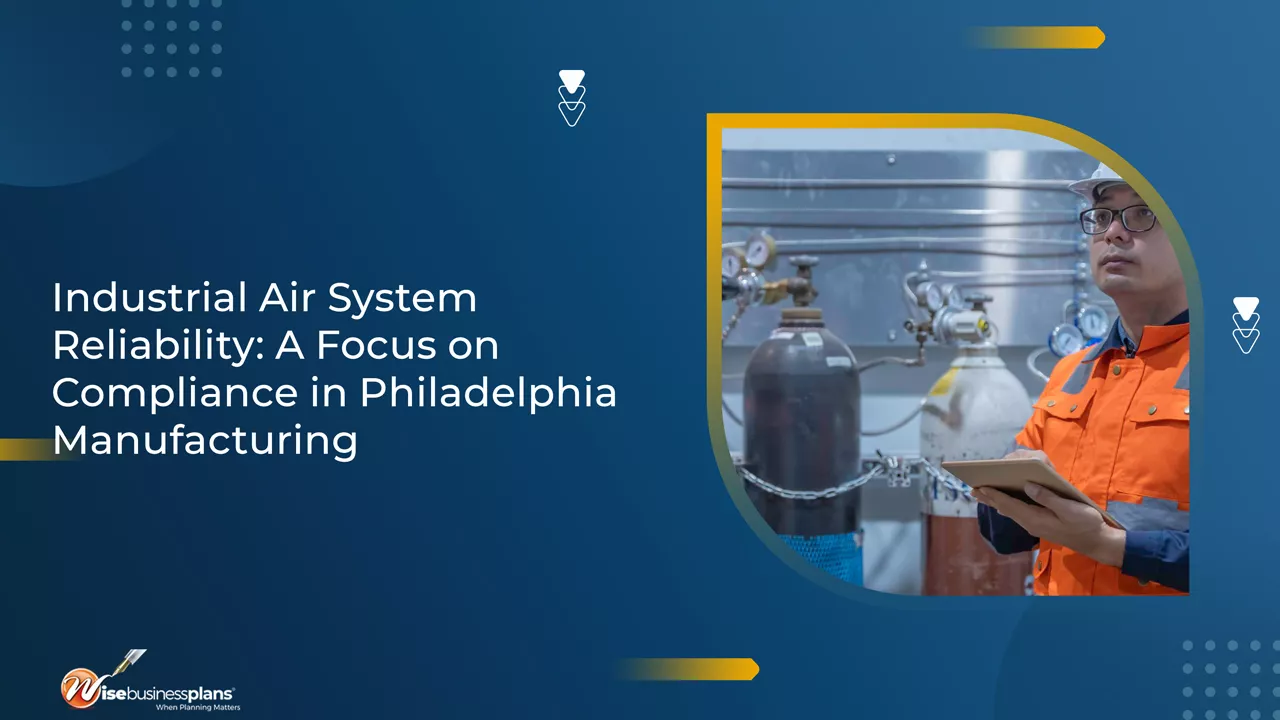
For manufacturing facility managers, the quality of compressed air often dictates the reliability and compliance of their entire operation. Air contamination is a known contributor to batch failure, representing a significant financial risk within regulated sectors. When operating a critical facility in Philadelphia, minimizing risk is paramount.
Industrial compressed air systems are relied upon for crucial processes, including pneumatic actuation and direct product handling. The reliability of this utility must meet the highest operational standards. If a system fails a compliance inspection, or contaminates a product batch, the resulting financial and regulatory consequences can be catastrophic. This guide details the essential strategies required to manage these systems effectively, highlighting why specialized support from a qualified compressor maintenance company is an indispensable asset for risk mitigation.
The Critical Need for Ultra-Pure Air in Drug and Life Science Manufacturing
Compressed air functions as more than a simple utility; it often acts as an active ingredient or a contact medium in many pharmaceutical processes. Consider operations such as the dry blending of active pharmaceutical ingredients (APIs) or the movement of product using pneumatic systems. In these direct contact scenarios, contaminants such as oil aerosol, moisture, and fine particulates generated by the air compressor industry can immediately compromise product quality.
Manufacturing facility managers in the Greater Philadelphia area, given the region’s concentration of biotech and advanced manufacturing, face particularly intense scrutiny regarding these utility systems. The expense associated with a product recall far exceeds the cost of a robust preventative maintenance program. Industry analysis indicates that a substantial percentage of critical manufacturing failures are traceable to utility system shortcomings, with compressed air systems being a frequent source of problems. Treating the compressed air system with the utmost rigor and consistency is an operational necessity.
Regulatory Standards and Documentation for Audit Success
Air quality is strictly regulated in high-purity applications, with the ISO 8573-1 standard serving as the global benchmark for compressed air purity. This standard categorizes air quality based on the concentration of solid particles, water, and oil. For applications involving direct product contact, Philadelphia facilities typically require air purity meeting or exceeding the ISO 8573-1: Class 1.2.1 designation. This requires extremely low levels of particulates, a verified pressure dew point, and zero aerosolized oil contamination.
Failure to consistently document and meet these purity requirements creates a significant vulnerability during an FDA audit. Auditors routinely request detailed logs of air quality testing and system maintenance. If documentation is incomplete or the testing history reveals deviations, facilities risk warning letters, production halts, and substantial financial penalties. Collaboration with a specialist service provider who understands these documentation requirements transforms compliance from a mere liability into a verified operational asset.
Technical Demands of Maintaining Purity and System Reliability
Achieving Class 1 purity standards necessitates fundamental design and equipment choices. While some facilities attempt to use lubricated compressors with external filtration systems, true contaminant-free air for the highest-risk applications is typically achieved with genuine oil-free compressor technology. These systems eliminate the potential for oil ingress into the airstream at the source.
Beyond the core compression unit, system design requires rigorous management of moisture and particulate matter. The following system components are essential for maintaining compliant air quality. High-performance desiccant air dryers are required to achieve the low pressure dew point specified by ISO Class 1, which is especially critical given the high ambient humidity common in the Philadelphia service region. Furthermore, multi-stage filtration must be incorporated to capture atmospheric particulates, and these filters require replacement on a strict, auditable schedule. Finally, the use of non-corrosive, non-shedding piping materials, such as specialized aluminum or stainless steel, is mandatory to prevent particulate generation within the distribution system itself.
Sizing and Redundancy in High-Purity System Design
System sizing and redundancy are critical determinants of both compliance and energy efficiency. An oversized system often experiences inefficient short-cycling, increasing maintenance needs and energy consumption. Conversely, an undersized system risks pressure drops or failure during peak demand, which can halt production. An essential initial step involves a compressed air audit that accurately models true consumption and incorporates necessary redundancy for uninterrupted operation.
Validation, Testing, and Documentation Protocols
Compliance demands a continuous process of validation, extending beyond the initial installation. Validation involves systematic testing of the compressed air quality against the required standards, both upon installation and at prescribed intervals thereafter. This documented testing must be fully traceable, providing definitive proof to regulatory bodies that the system consistently delivers the required air purity levels.
Specialized Preventative Maintenance for Regulated Environments
Scheduled maintenance is the most effective safeguard against the cost and disruption of unplanned system failure. A specialized service provider implements a preventative maintenance (PM) program tailored not merely to the manufacturer’s schedule, but to the site’s specific ISO compliance requirements. This structured program minimizes operational risk.
A reliable PM strategy involves several key elements. Strict maintenance schedules for components like filters, belts, and specialized lubricants are implemented based on usage hours and critical application needs. Continuous monitoring of key operational parameters, such as differential pressures and dew point, enables service technicians to predict potential component failure before it impacts air quality. Critically, every service action, part replacement, and test result must be meticulously logged to maintain a transparent, audit-ready maintenance history.
Cost Analysis: Calculating the Return on Compliance Investment
While the capital expenditure for a compliant, high-ppurity compressed air system is significant, the Return on Investment (ROI) is primarily realized through risk mitigation and guaranteed reliability. An optimally designed and maintained system often yields significant energy savings, minimizing wasted compressed air.
However, the dominant factor in the ROI calculation is the protection from non-compliance. A major product recall can incur costs far exceeding the entire capital cost of the air system. Consequently, treating compliance maintenance as a crucial long-term investment, rather than a recurring operational expense, is the most fiscally sound decision for any facility manager.
Actionable Steps for Air System Assurance in the Philadelphia Metro Area
For any system within the air compressor for pharmaceutical industry category, specialized knowledge is not optional; it is a fundamental requirement for operational stability and compliance. The demanding production schedules common to Philadelphia manufacturing facilities necessitate a service partner that offers both deep technical expertise and rapid, local response capabilities.
Successfully managing compressed air compliance requires several definitive steps. First, ensure that the system design aligns with the required ISO purity class and incorporates necessary component redundancy. Second, establish a formal, documented preventative maintenance schedule that integrates seamlessly with internal audit procedures. Finally, partner with a technical service provider that can guarantee rapid, expert support, especially in emergency scenarios.